Hiring employees in India from the UK has become one of the smartest ways to scale a business today. From cost savings to access to highly skilled professionals, India offers a powerful opportunity for companies looking to grow efficiently. Many businesses compare Employer of Record vs staffing models or even look at EOR vs outsourcing when deciding how to hire globally.
However, global hiring isn’t as simple as it sounds.
There are challenges around:
- Legal compliance
- Payroll management
- Contracts and taxation
- Employee reliability and infrastructure
This is where models like Employer of Record (EOR) and remote staffing come into play.
But here’s the real question:
Do you actually need an EOR to hire in India?
Or is remote staffing a better, more practical alternative?
In this guide, we’ll break down EOR vs remote staffing, compare costs, control, and scalability—and help you choose the right model for your UK business.
For more information on “future of work and global hiring trends” that gives insights on jobs and the future of work.
What is Employer of Record (EOR)?
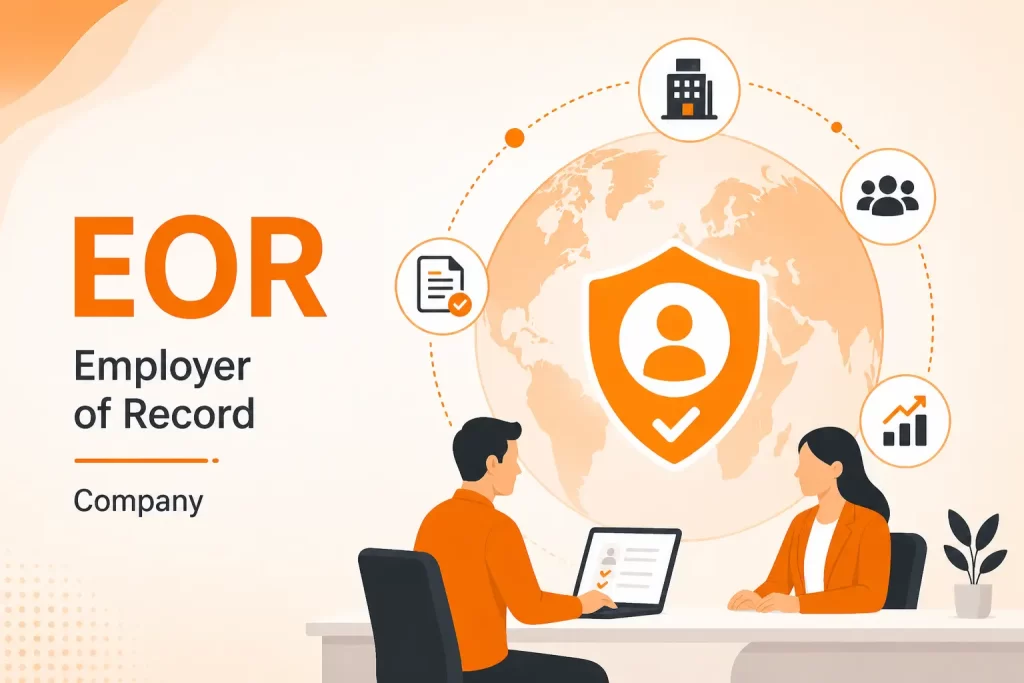
An Employer of Record (EOR) is a third-party organization that legally employs workers on behalf of a company in another country.
Instead of setting up a legal entity in India, a UK company can use an EOR to hire employees quickly and compliantly.
How EOR works:
- The EOR becomes the legal employer on paper
- It handles employment contracts, payroll, taxes, and compliance
- The client company manages day-to-day work and responsibilities
Why companies choose EOR:
- No need to establish a local company
- Faster market entry
- Reduced legal risk
- Simplified HR operations
At first glance, EOR seems like the perfect solution. And in many cases, it is.
But it’s not always the most efficient or cost-effective option—especially for long-term hiring. When evaluating offshore staffing vs EOR, it’s important to understand how each model impacts cost, control, and long-term scalability.
What is Remote Staffing (Managed Model)?
Remote staffing is a flexible hiring model that allows companies to build dedicated teams in another country without the complexity of setting up operations there.
With Remote Staffing Pro, the process is structured but simple:
- We identify and shortlist candidates based on your requirements
- You interview and select the final candidate
- We hire the employee on our payroll in India
- The employee works from our office infrastructure
- We manage salary, HR, and administrative support
- You handle daily tasks, performance, and workflow
👉 In essence, you get a dedicated, office-based employee in India who works exclusively for your business.
This model combines:
- Recruitment
- Payroll support
- Infrastructure
- Ongoing management assistance
Which makes it far more than just traditional outsourcing. This is where the comparison between Employer of Record vs staffing becomes crucial for businesses looking to hire in India.
EOR vs Remote Staffing: Key Differences
Many companies researching EOR vs outsourcing often realize that remote staffing provides greater flexibility and control. To understand which model is right for you, it’s important to compare them side by side:
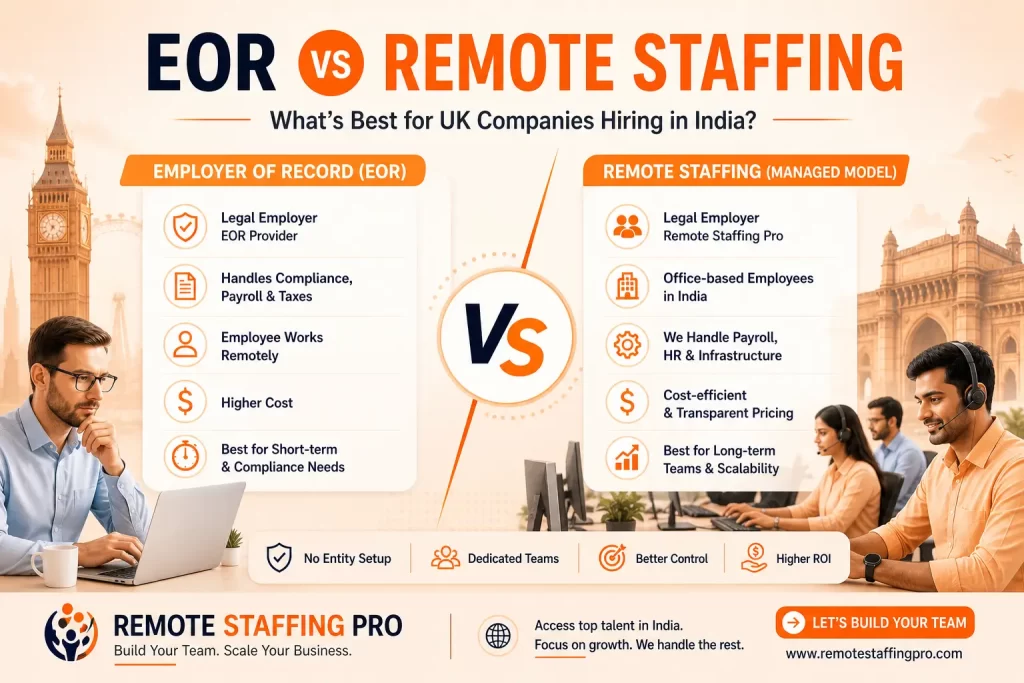
| Factor | EOR | Remote Staffing Pro |
|---|---|---|
| Legal employer | EOR provider | Remote Staffing Pro |
| Compliance handling | Fully managed | Managed & guided |
| Office infrastructure | ❌ Not included | ✅ Included |
| Employee setup | Remote (home-based) | Office-based |
| Cost | High | Cost-efficient |
| Control | Moderate | High |
| Scalability | Moderate | High |
| Flexibility | Limited | High |
Many businesses that compare EOR and staffing ultimately choose to hire remote staff for UK companies through dedicated staffing models.
The Biggest Difference (Most Companies Overlook This)
The biggest distinction comes down to purpose:
- EOR is a legal solution
- Remote staffing is an operational + hiring solution
👉 If your goal is simply to hire legally in another country, EOR is sufficient.
👉 But if your goal is to build a high-performing, reliable team, remote staffing offers far more value.
Another key difference is the working environment.
With EOR:
- Employees usually work remotely from home
- You have limited visibility into their setup
With Remote Staffing Pro:
- Employees work from a professional office environment
- You get better discipline, collaboration, and reliability
When Should You Use an EOR?
EOR is not a bad option—in fact, it’s the right choice in certain scenarios.
You should consider EOR if:
- You are entering a new country for the first time
- You need strict legal compliance from day one
- You are hiring for short-term roles or testing the market
- You operate in highly regulated industries
- You don’t want to be involved in HR or employment structures at all
In these situations, EOR provides a safe and straightforward path.

When is Remote Staffing a Better Alternative?
For many UK companies, remote staffing turns out to be the more practical option—especially for long-term growth.
Remote staffing is ideal when:
- You want to build a dedicated team in India
- You are hiring for ongoing roles (designers, developers, marketers, etc.)
- You need cost efficiency without compromising quality
- You want more control over your team
- You prefer office-based employees for reliability and productivity
- You are focused on scaling operations over time
In these cases, EOR can feel expensive and limiting, while remote staffing provides flexibility and better ROI.
For most growing businesses, especially those exploring remote staffing India for UK companies, this model offers better scalability and long-term value.
Cost Comparison: Employer of Record vs Remote Staffing
In the debate of offshore staffing vs EOR, cost becomes one of the biggest deciding factors. Check the following empoyer of record vs remote staffing comparison.
| Cost Factor | EOR Costs | Remote Staffing Pro Costs |
|---|---|---|
| Pricing Model | Percentage of employee salary | Percentage of employee salary |
| What You Pay | Salary + compliance fee | Salary + service fee |
| Payroll & Compliance | Included | Included |
| Office Infrastructure | ❌ Not included | ✅ Included |
| Recruitment & Hiring | Often limited or extra cost | ✅ Included |
| Operational Support | Minimal | ✔ Ongoing support included |
| Value for Cost | ❌ Pay mainly for compliance | ✔ Full-service solution |
| Long-Term Cost Efficiency | Can become expensive at scale | More value for the same pricing model |
The Bottom Line:
- EOR = Pay more for legal simplicity
- Remote Staffing = Pay smarter for long-term growth
For more information check the benefits of offshore hiring.
Do You Need an EOR to Hire in India?
This is one of the most common questions UK companies ask.
The answer is: Not always.
You do NOT necessarily need an EOR if:
- You are comfortable working with a structured staffing partner
- You are hiring for long-term roles
- You want more flexibility and cost control
👉 In many cases, remote staffing provides a simpler and more efficient solution without unnecessary overhead.
Why UK Companies Prefer Hiring from India
Access to Skilled Talent
India offers a vast pool of professionals across design, development, marketing, and operations.
Significant Cost Advantage
Reduce operational costs while maintaining high-quality output and scaling efficiently.
Strong English Communication
Seamless collaboration with UK teams due to excellent English proficiency.
Time Zone Advantage
Overlap working hours enable real-time communication and faster turnaround.
Remote Work Ready
India has rapidly adapted to global remote work standards and infrastructure.
Why Choose Remote Staffing Pro?
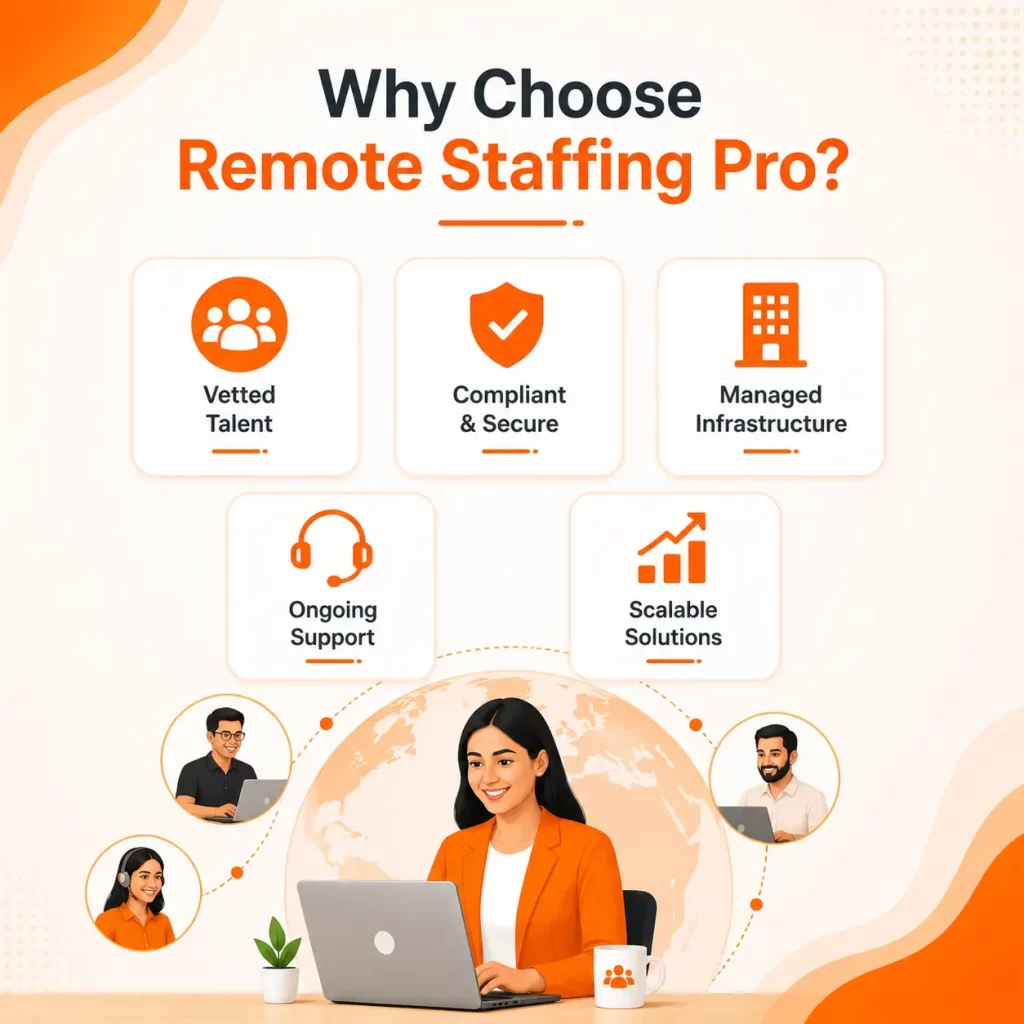
Remote Staffing Pro is designed for companies that want more than just hiring—we provide a complete team-building solution.
What sets us apart:
- ✔ Dedicated employees working exclusively for you
- ✔ Office-based setup for better productivity and accountability
- ✔ Payroll, HR, and compliance handled locally
- ✔ End-to-end recruitment support
- ✔ Transparent and scalable pricing
- ✔ Ongoing operational support
👉 You get the benefits of global hiring without the typical risks and inefficiencies
Final Thoughts: EOR vs Remote Staffing
Both EOR and remote staffing serve important roles in global hiring—but they are built for different needs.
Choose EOR if:
- Compliance is your top priority
- You’re testing a new market
- You need a quick, legal hiring solution
Choose Remote Staffing if:
- You want to build a long-term team
- You need cost efficiency
- You value control and productivity
- You want a scalable hiring model
👉 For most UK companies hiring in India, remote staffing offers a more practical, flexible, and cost-effective solution. Whether you’re comparing Employer of Record vs staffing, evaluating EOR vs outsourcing, or exploring remote staffing for UK companies, the right choice depends on your long-term hiring goals.
Ready to Hire Remote Staff from India?
If you’re looking for a smarter alternative to EOR:
👉 Partner with Remote Staffing Pro
Build your dedicated team with:
- Pre-vetted professionals
- Office-based employees
- Full operational support
Start scaling your business with confidence today. Looking to hire remote staff for UK companies? Explore our dedicated staffing solution.
FAQ Section
Do I need an EOR to hire employees in India?
No, you can hire through remote staffing models without setting up a legal entity.
Is EOR expensive for long-term hiring?
Yes, EOR can become costly over time, especially when hiring multiple employees.
What is better: EOR or remote staffing?
It depends on your needs. EOR is best for compliance, while remote staffing is better for scaling teams efficiently.
What is the difference between offshore staffing vs EOR?
Offshore staffing focuses on building dedicated teams with operational control, while EOR primarily handles legal employment and compliance.