As businesses continue to evolve in a global and digital-first economy, hiring models have also transformed significantly. One of the most effective and widely adopted approaches today is dedicated remote staffing. With the rise of global teams and evolving remote work trends, businesses are shifting towards more flexible hiring models.
From startups to large enterprises, companies are increasingly turning to remote staffing services to access global talent, reduce costs, and improve operational efficiency. But what exactly does this model involve, and how does it differ from traditional hiring or outsourcing?
This guide explores everything you need to know about dedicated remote staffing, including how it works, its benefits, and why it is becoming a preferred solution for companies worldwide – especially those looking to hire remote staff from India.
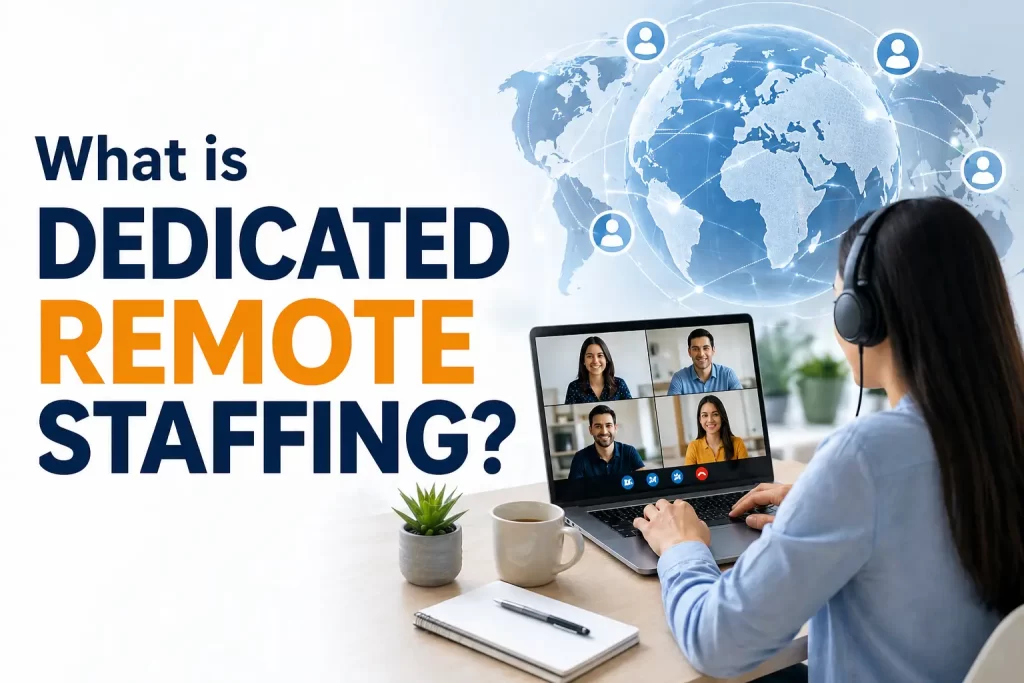
What is Dedicated Remote Staffing?
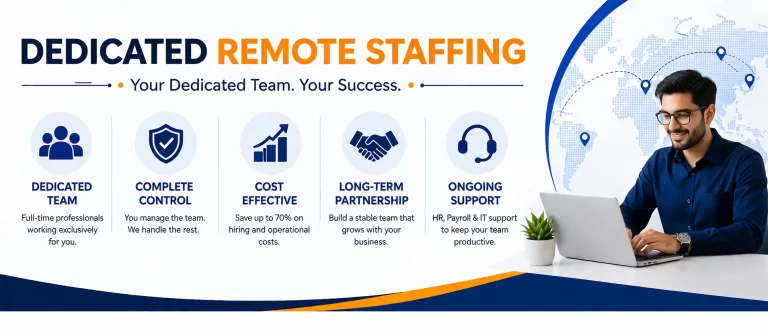
Dedicated remote staffing is a hiring model in which businesses recruit full-time employees who work exclusively for them but are located in a different country. These employees are typically hired through a remote staffing company in India or another offshore location.
Unlike freelancers or outsourcing agencies, a dedicated remote team is fully aligned with your organization. They follow your internal processes, work on your systems, and contribute as long-term team members.
This model allows businesses to maintain control over their operations while benefiting from the flexibility and cost advantages of offshore hiring.
How Dedicated Remote Staffing Works
The process of setting up a dedicated offshore team is structured yet straightforward. It typically involves the following steps:
Identifying Hiring Needs
The business defines the role, responsibilities, and required skill set. This could include positions such as developers, designers, marketers, or administrative staff.
Partnering with a Remote Staffing Provider
Businesses can interview shortlisted candidates and select individuals who best fit their needs.
Candidate Screening and Interviews
The business defines the role, responsibilities, and required skill set. This could include positions such as developers, designers, marketers, or administrative staff.
Onboarding and Setup
Once selected, the remote employees are onboarded. The staffing provider often manages infrastructure, office space, and HR processes.
Ongoing Management
The hired professionals work as part of your team, using your tools and reporting structures, while the staffing provider handles payroll, compliance, and administrative support.
This approach simplifies international hiring and reduces operational complexity.

Key Features of a Dedicated Remote Team
A dedicated remote team differs from other hiring models in several important ways:
- Exclusivity: Employees work only for one business
- Long-term engagement: Focus on continuity rather than short-term projects
- Integration: Team members align with company culture and workflows
- Control: Businesses manage tasks, priorities, and performance
These features make dedicated remote staffing an effective alternative to both in-house hiring and outsourcing.
Benefits of Dedicated Remote Staffing
1. Cost Efficiency
One of the primary reasons businesses adopt offshore staffing India services is cost savings. Hiring remote employees from countries like India can significantly reduce expenses related to salaries, office space, and infrastructure.
2. Access to a Global Talent Pool
Dedicated remote staffing removes geographical limitations, allowing companies to hire skilled professionals from across the world.
3. Scalability and Flexibility
Businesses can easily scale their teams based on project requirements or growth stages.
4. Improved Productivity
A dedicated team working exclusively for your organization tends to be more focused and aligned with business goals.
5. Reduced Administrative Burden
A remote staffing company India typically manages HR, compliance, and payroll, allowing businesses to focus on core activities.
Dedicated Remote Staffing vs Outsourcing vs Freelancers
Understanding the differences between these models helps in choosing the right approach.
| Dedicated Remote Staffing | Outsourcing | Freelancers |
|---|---|---|
| ✔ Full-time employees | ✔ Project-based work | ✔ Flexible & short-term |
| ✔ High level of control | ✖ Limited visibility | ✖ Work with multiple clients |
| ✔ Long-term engagement | ✖ External team management | ✖ Less consistency |
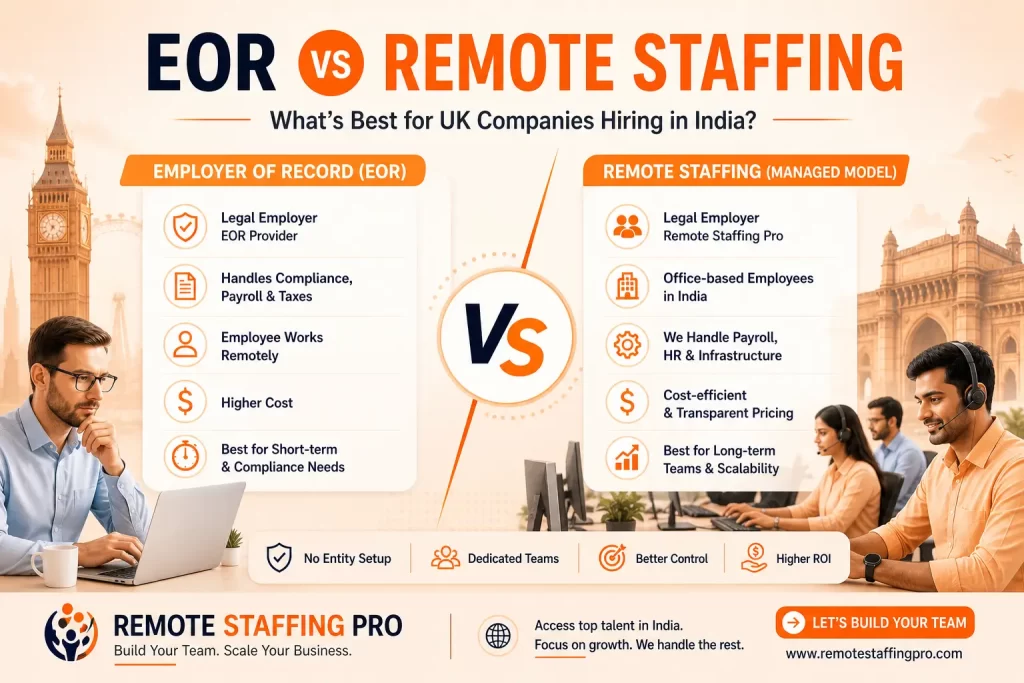
While each model has its use cases, dedicated remote staffing is particularly suitable for businesses seeking stability and long-term collaboration.
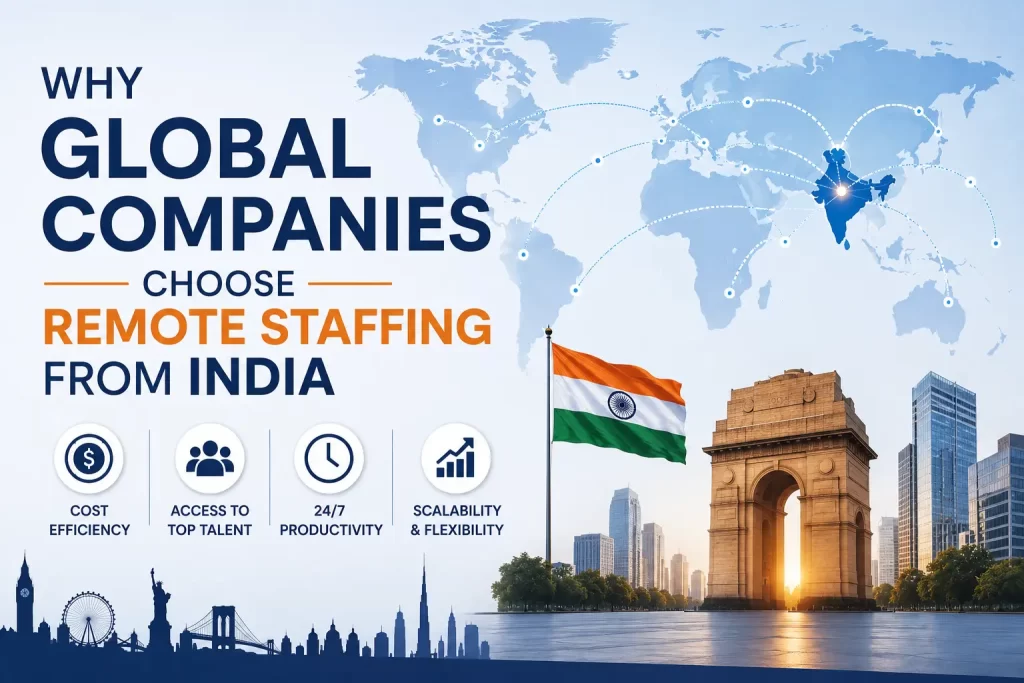
Why Businesses Choose Offshore Staffing in India
India has emerged as a leading destination for offshore staffing services, attracting companies from the UK, US, and other global markets.
Large Talent Pool
India produces a vast number of skilled professionals across industries such as IT, design, finance, and customer support.
Established Remote Work Infrastructure
India has a mature ecosystem that supports remote work, including technology and infrastructure.
Strong Communication Skills
English proficiency among professionals facilitates seamless collaboration with international teams.
Time Zone Compatibility
Flexible working hours enable overlap with UK and US business hours.
Cost Advantage
Lower operational costs make it feasible to hire high-quality talent at competitive rates.
Common Roles in Dedicated Remote Staffing

Challenges of Dedicated Remote Staffing
While the benefits are significant, there are also challenges to consider:
Communication Barriers
Working across different locations may require structured communication processes.
Management Adaptation
Businesses may need to adopt new tools and workflows for managing remote teams.
Time Zone Differences
Although manageable, time zone gaps can affect real-time collaboration.
Cultural Differences
Understanding work styles and expectations is important for smooth integration.
However, these challenges can be effectively addressed with the right systems and practices.
Best Practices for Managing a Dedicated Remote Team
To maximize the benefits of dedicated remote staffing, businesses should follow these best practices:
Set Clear Expectations
Define roles, responsibilities, and performance metrics from the beginning.
Use Collaboration Tools
Platforms like Slack, Zoom, and project management tools help streamline communication.
Maintain Regular Communication
Schedule daily or weekly check-ins to ensure alignment.
Focus on Results
Measure performance based on outcomes rather than hours worked.
Encourage Team Integration
Include remote employees in meetings and updates.
Effective remote team management strategies are essential to ensure productivity and collaboration.
The Growing Demand for Dedicated Remote Staffing
The demand for remote staffing services has grown rapidly in recent years. Factors such as digital transformation, remote work adoption, and cost optimization have accelerated this trend.
For businesses in the UK and other developed markets, hiring offshore talent is no longer just an option—it is becoming a strategic necessity.
The ability to build a dedicated offshore team provides companies with a competitive advantage in terms of agility, scalability, and access to expertise.
Conclusion
Dedicated remote staffing is a modern hiring solution that combines the benefits of global talent access with the control of in-house teams. By enabling businesses to hire full-time remote employees who work exclusively for them, this model bridges the gap between traditional hiring and outsourcing.
With the growing availability of skilled professionals and reliable staffing providers, especially in India, businesses can build efficient and cost-effective teams without geographical limitations.
Whether you are a startup looking to scale or an established company seeking optimization, dedicated remote staffing offers a flexible and sustainable approach to workforce management.